 Give
Give
 Prayer
 Call Us
 Know Jesus

There was a prophecy delivered by the prophet Malachi before the appearing of John the Baptist on the banks of the Jordan 400 years later. In the prophecy he warned of something that all citizens of any great nation should heed. In it the prophet stated: Behold, I will send you Elijah the prophet before the great and terrible day of the Lord comes.6 And he shall turn and reconcile the hearts of the [estranged] fathers to the [ungodly] children, and the hearts of the [rebellious] children to [the piety of] their fathers [a reconciliation produced by repentance of the ungodly], lest I come and smite the land with a curse and a ban of utter destruction. (Malachi 4:5-6)
But now the question must be asked who are our prophets, and America’s Father’s? I could make a long list but will only briefly allude to a few. One of those father’s was Noah Webster, known as the Father of American Scholarship and Education. It is estimated that there were over 100 million copies of his Blue Back Speller in use in the 1800’s. This textbook is credited for teaching children how to read, spell, and pronounce words for 100 years. He wrote the first American dictionary, mastering over 25 languages to prepare himself for the task. What most fail to recognize is that Noah Webster was a devout, born-again believer. Dr. Del Tackett wrote: “When I was in Washington, studying the founders on the side, I was deeply impressed with their wisdom and intellect. Let’s begin with one of Noah’s statements:” In my view, the Christian Religion is the most important and one of the first things in which all children, under a free government, ought to be instructed…no truth is more evident to my mind than that the Christian Religion must be the basis of any government intended to secure the rights and privileges of a free people. “Note that Noah is reconfirming what we have seen before in terms of the foundations. But he is also expressing another common view, one that is quite logical: if Christianity is a vital foundation to freedom, then children must be instructed in that foundation.”
Another one of America’s spiritual fathers was John Adams (1735–1826). He was a Founding Father, the first Vice President (1789–1797), and the second President of the United States (1797–1801). A brilliant legal mind from Massachusetts, he championed American independence, helped negotiate peace with Britain, and established the navy. He once stated: Statesmen, my dear Sir, may plan and speculate for liberty, but it is religion and morality alone, which can establish the principles upon which freedom can securely stand. His second cousin, Samuel Adams (1722–1803) was a Founding Father of the United States, a key leader of the American Revolution, and an instrumental political philosopher. A master organizer and propagandist, he founded the Sons of Liberty, coordinated the Boston Tea Party, signed the Declaration of Independence, and later served as Governor of Massachusetts. Samuel Adams added to his second cousins remarks by stating: Religion and good morals are the only solid foundations of public liberty and happiness.
Dr. Tackett adds another founding father, Benjamin Rush. Dr. Tackett writes: “Dr. Rush was a brilliant intellectual, completing college at the age of 14 and then studying medicine at the University of Edinburgh. He was a fierce abolitionist, advocated for women’s education, and one of the signers of the Declaration of Independence. Here is his perspective: The only foundation for…a republic is to be laid in Religion. Without this there can be no virtue, and without virtue there can be no liberty, and liberty is the object and life of all republican governments. Here he begins with reiterating the foundations we have seen before. Liberty can only come if the people are virtuous, moral. But their virtue and morality must come from a foundation of religion. What does he mean when he uses the word religion? Here is his statement:…Christianity is the only true and perfect religion; and that in proportion as mankind adopt its principles and obey its precepts they will be wise and happy.
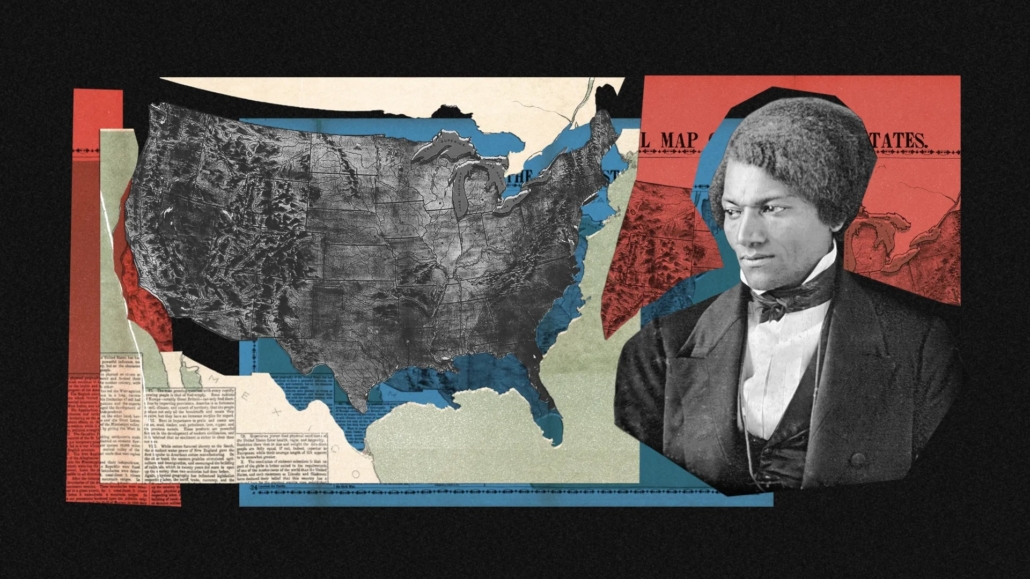
One overlooked spiritual father, connected to the fight of abolition in America, was Frederick Douglas. Myles Werntz, of Christianity Today wrote: In 1852, Frederick Douglass was invited to deliver a speech at the annual Independence Day celebration in Rochester, New York. After escaping from slavery some 14 years earlier, Douglass became an abolitionist and a sought-after speaker in the United States and abroad. As a Christian, Douglass filled his speeches with biblical allusions and often directly addressed churches. He spoke often of the contradiction between the faith Christians of his day professed and their acceptance of slavery, naming the distance between the words of Jesus and the prejudice and other moral failures of the American church. The Smithsonian Magazine celebrated Douglas in an article titled: A Nation’s Story: “What to the Slave is the Fourth of July?” In it the article stated: On July 5, 1852, Frederick Douglass gave a keynote address at an Independence Day celebration and asked, “What to the Slave is the Fourth of July?” Douglass was a powerful orator, often traveling six months out of the year to give lectures on abolition. His speech, given at an event commemorating the signing of the Declaration of Independence, was held at Corinthian Hall in Rochester, New York. It was a scathing speech in which Douglass stated, “This Fourth of July is yours, not mine, You may rejoice, I must mourn.” In his speech, Douglass acknowledged the Founding Fathers of America, the architects of the Declaration of Independence, for their commitment to “life, liberty and the pursuit of happiness:” After expounding on the honor due to the contributions of our founding fathers Douglas noted with sadness: But such is not the state of the case. I say it with a sad sense of the disparity between us. I am not included within the pale of glorious anniversary! Your high independence only reveals the immeasurable distance between us. The blessings in which you, this day, rejoice, are not enjoyed in common. The rich inheritance of justice, liberty, prosperity and independence, bequeathed by your fathers, is shared by you, not by me. The sunlight that brought light and healing to you, has brought stripes and death to me. This Fourth July is yours, not mine. You may rejoice, I must mourn.”
Douglas’ speech reminds believers everywhere that the “City on a Hill” birthed by our Puritan Fathers in 1630, was created simply because of the freedom and liberty afforded through the stripes of Christ. It is by His Blood that we gained our freedom from slavery to sin and through it was birthed our great nation. We must never forget that regardless of those historical detractors who hate and despise all this country holds dear we should never swerve from those Christian values that believed the “City of Christ” could be established on the “Hill” of North America. We must always be conscious that while we celebrate our emancipation and deliverance from slavery to sin there are still others who do not enjoy our freedom. May God, by HIs Grace and the Power of His Spirit, shed abroad the Love of Jesus in our hearts to such a degree that we cease remaining silent – joyfully extolling to all the freedom, peace and forgiveness we now enjoy.